The Year Without a Summer, 210 years on.
The Romantics are figures that persist in the public’s memory, whether through English Literature set texts, new film adaptations of Frankenstein, cheesy vampire books or pop culture references to the “mad, bad and dangerous to know” rockstar of his era, Lord Byron. Why is it we keep returning to these historic figures and their great works time and time again? 210 years on, the same issues and questions that faced this set of revolutionaries now face us – and maybe the answers can be found in texts that have been with us for over 2 centuries.
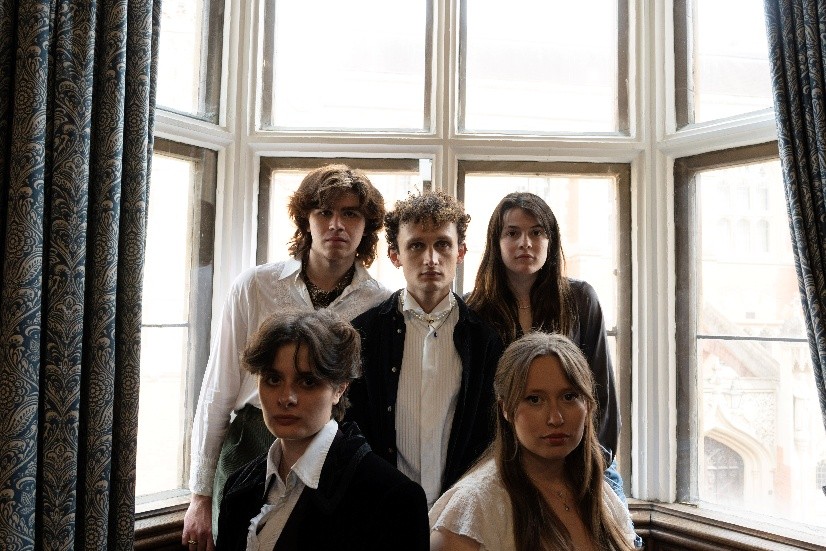
When show cowriter Natasha Atkinson and I started writing 1816, a new musical about the summer that brought us Frankenstein and the first modern vampire novel, I thought we were writing a comedy about 5 overdramatic poets on a disastrous writer’s retreat. There is much a modern audience can connect to within the show – Mary Shelley’s struggle for recognition as a young woman with famous parents and a famous husband after the traumatic loss of her child, Byron as the first modern celebrity and his struggles with fame, Percy Shelley’s political activism, Polidori’s exclusion from the group and strained, complex relationship with Byron, and Claire Clairmont’s desperation for support from a man who used her and cast her aside, in a world staged against her. But that was as far as the connection went. Romanticism as a movement only influenced musical inspiration and Percy Shelley’s grandiose speeches.
But, as the show has grown, going on to sell out two nights at the Camden Fringe and a run in Cambridge, and as drafts upon drafts have been edited and staged, I find myself relating more and more to the motivations of these five literary legends. Back then, Europe was in a post-Napoleonic war recession, exacerbated by a volcanic eruption responsible for mass food shortages and constant rain. Industrialism was in its early stages and the future was uncertain. Sounds familiar, in many ways. In an uncertain modern world, standing on the precipice of a technological revolution, I found myself drawn to the concepts of Romanticism. Art for art’s sake – and the value in the process of creation – in the face of a generative AI revolution. Connection with nature, in an increasingly digital world. The themes continued to weave themselves into my life, and with each draft, they came out stronger and more personal.
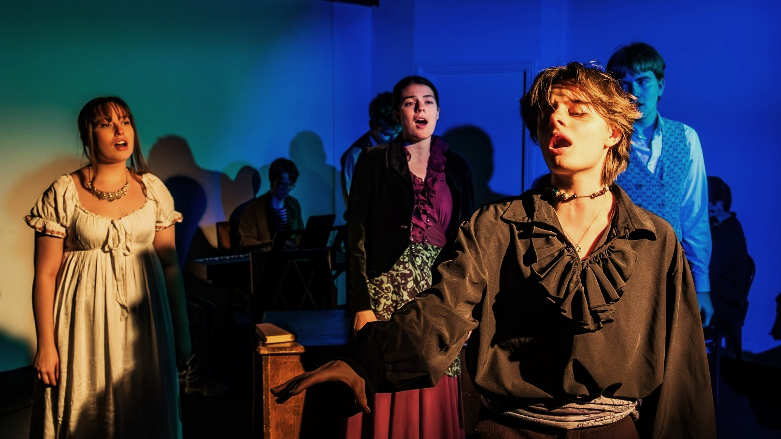
The writers, too, have cemented themselves in my mind, now that we near the one-year anniversary since the debut of the show, and nearly 4 years since the idea was first agreed upon. Polidori has always been a driving force within the show, as someone on the fringes of a group of successful creatives, a scientist aspiring to write something great, using his words as a tool to wield power and enact revenge in an unjust situation. But Lord Byron has continued to grow on me, despite my personal loyalty to the travelling doctor who wrote a revenge novel about his mistreatment.
As a famous figure drowning in infamy, scandal, and affair accusations, Byron can sometimes reach a mythical status among both his fans and his enemies. This is not by accident. A lot of his reputation and the reports of his personality that survive are an image he carefully curated and chose to project. Any man with an upbringing as turbulent as his, coloured by his disability, queerness, abuse and religious guilt, would struggle with self-image. Then, he was thrown into the public eye. Surrounded by devotees and critics, who wouldn’t turn the pedestal they’d been raised onto into a fortress of legend, rumour and glory? We see the exact same issues with parasocialism and blurring the boundaries between stage persona and personal life now. It does not absolve damage done, but it explains why he makes the choices he does to an audience who understands exactly the damage fame can do.
1816 has tended more and more towards these grey areas as the show has gone on. Explicitly asking what price would you pay for greatness? and are the works that survive the full story, or just warped perspectives that we piece together into a finished product?. Though the musical is, at its core, material taken from Polidori’s diary, bringing justice to his and Claire Clairmont’s often-forgotten stories, it is so much more than that. It is a discussion of Romanticism and the vital importance of creation and art. It is a reflection on the issues facing women, both in the 19th Century and now. It is legacy, ambition and how the collective memory reinterprets history. We will never have answers to the questions we pose (not without a time machine to help), but we can do our best to be open about who these people were – flawed humans, outcasts from British society, revolutionaries, legends, failures, all of the above. Thoroughly modern, yet lost to time. We hope to capture this, in a show that throws together Romantic-classical music with jazz and pop, weaving original poetry excerpts in with fanfiction jokes.
The Romantics may be long gone, but their ambitions, the hurdles they faced and their impact on the world around them persist to this day for a reason. Though we, as a theatrical production, like to joke about Byron Summer and #BringBackRomanticism2026, maybe there are some things we can genuinely learn from this summer, 210 years on. Whether it’s Percy Shelley’s call to write as a way to free yourself from the weight of expectations and capture the world around you, or how Polidori reclaims the power in his narrative, we hope the show does more now than provide an hour of entertaining jokes shared between five young adults thrust into the spotlight – now somewhat literally.
1816 is running at the Brighton Fringe, at the Lantern Theatre, 9pm on the 18th May and 2pm on the 19th May. 1816 will also be performed at Southwold Arts Centre on the 30th October. The official cast album for 1816 is set for release to all streaming platforms in early June. Find out more at 1816musical.com