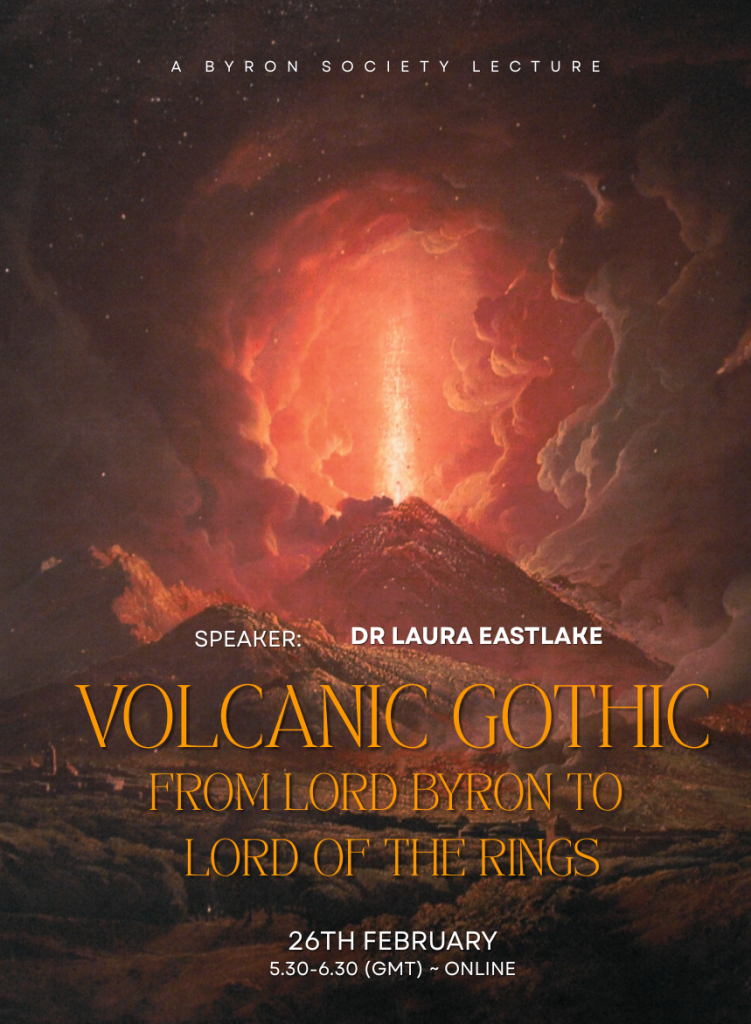
This talk explores how volcanos have shaped the Gothic as a genre and how Lord Byron emerged as the ultimate ‘Volcanic Gothic’ celebrity.
Byron’s public image as a scandalously ‘vampiric’ figure is well known from Polidori’s ‘The Vampire’ and Lady Caroline Lamb’s Glenarvon, but this paper explores how Byron and his admirers often preferred the volcanic metaphor to the vampiric as a means of talking about his poetic genius and fiery public persona.
This talk will set Byron’s work in the context of widespread scientific and popular interest in volcanos in the 18th and 19th centuries, from geological studies of Etna and Vesuvius to popular fascination with the excavations at Pompeii. I suggest that, as Gothic signifiers, the volcano and the vampire emerge as cultural cousins: both serve as portals in time where menaces from the past might be spewed forth to menace the present, and both producing uncannily petrified people as embodiments of Gothic anxiety.
Understanding how the Gothic has been shaped by volcanos affords us a new way of reading some of Byron’s most famous works and tracing his influences in texts as diverse as Little Women, Dracula and The Lord of the Rings.